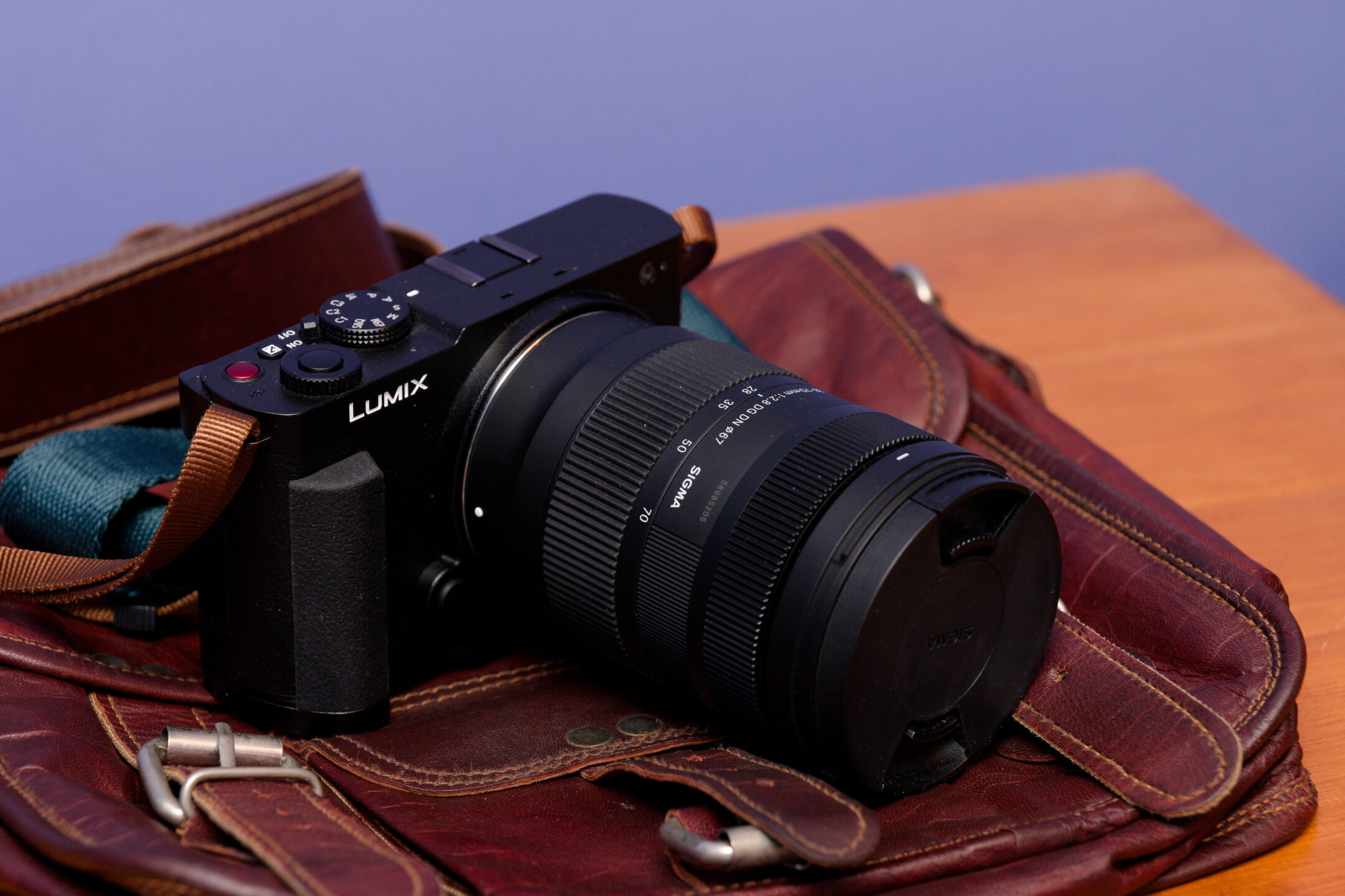
My current camera collection is the Lumix S5 II, Lumix S9 and OM Systems OM-5. The S5 II is my main video camera and the S9 was bought as a matching B-cam, replacing a S1. The OM-5 was originally intended as a travel camera but ended up being my main photography camera instead of the S5 II for size reasons. I never took the S9 seriously for photography due to the lack of viewfinder and mechanical shutter, poor ergonomics and no matching compact lenses.
The lens situation has improved since launch with the 18-40 and now the 40/2, which is the first (Panasonic) compact lens which can offer total-system light gathering beyond what micro four-third platform can.
I started thinking that if instead of fixating on what the S9 can’t do, think about what it can.
Reference point
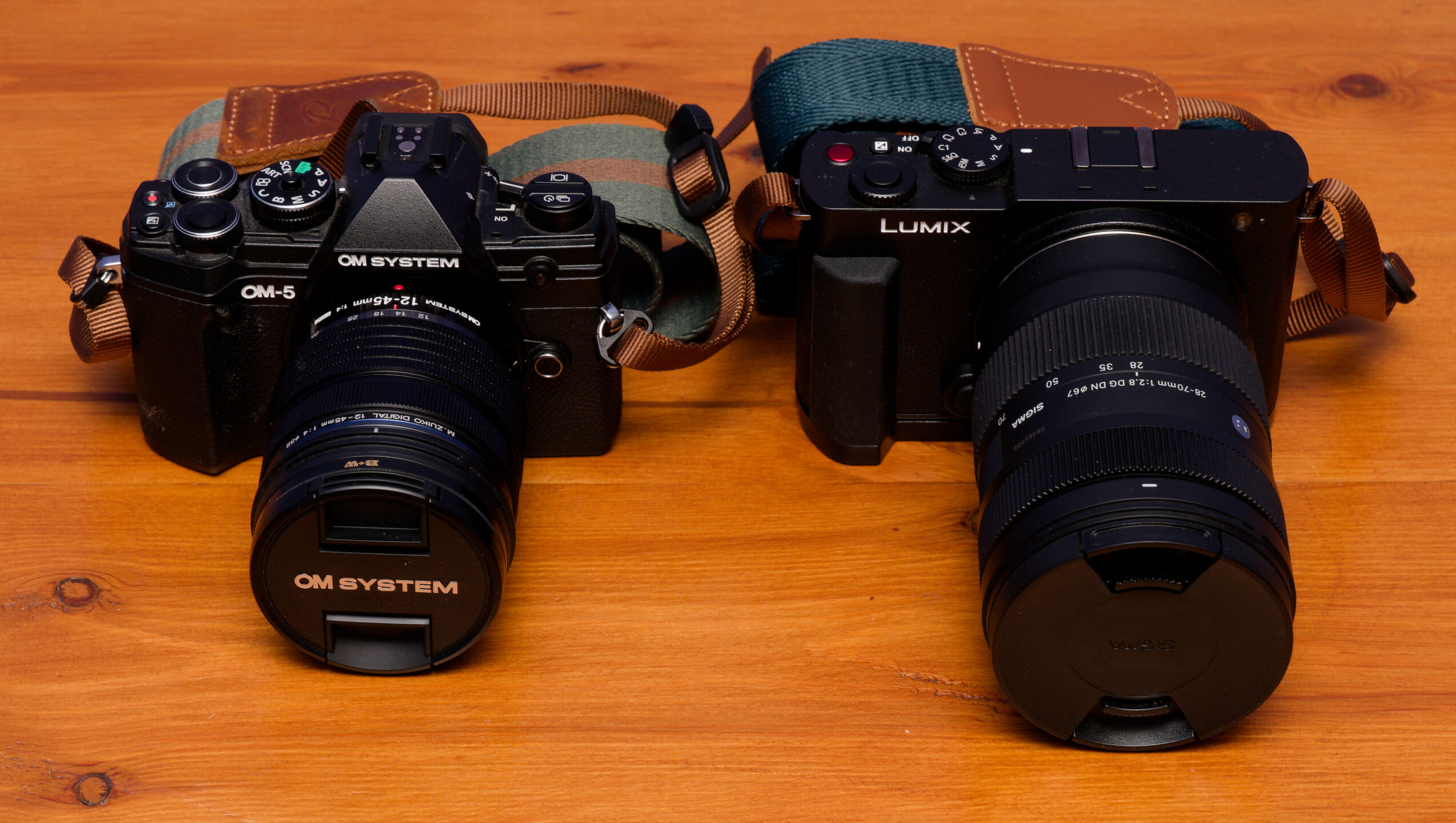
I’m going to compare the S9 mostly to the OM-5 as I put them in the same category of “small bag” cameras. The S5 II is the actual best camera if size isn’t an issue.
Of the two, the OM-5 feels nicer in the hand. If you practice handling the S9 for a while you can start to think, “This isn’t so bad, I could use this”. But then once you pick the the OM-5 again it’s, “Oh no, this is really is much better”. The OM-5 is noticeably lighter and the ergonomics are superior with the built-in grip (I’m using the Smallrig grip on the S9), and more controls. The OM-5 feels like a proper camera, just small, while the S9 feels like a camera that’s been aggressively cut down.
In actual use, I didn’t find the lack of physical controls on the S9 that much of an issue. I’m not changing ISO and white balance shot-to-shot. But it really should have two top control wheels and the back dial is horribly cheap feeling.
The OM-5 is also better looking, the S9 is very much from the house-brick school of design. And that does contribute to the perception of its size, it looks bigger than the OM-5 even though in some dimensions it’s actually smaller.
Lens comparisons are a bit subtle. The OM-5 does benefit from smaller lenses but it’s worth remembering these are often small because they are specs that wouldn’t exist on full-frame. No one is making a full-frame 50/3.6 or an F12 standard zoom. Where equivalent specifications exist on MFT they are close to the size of the full-frame option and more expensive. Full-frame systems will also have a lens performance level above what’s available on MFT, e.g. standard zooms faster then F5.6 equivalent.
Dog days


I spent a few mornings taking photos of my dog Molly on our morning walk with different camera and lens combinations. The walk takes up to an hour so is long enough to get a feel for what it’s like to carry each setup. I should point out, those aren’t rolling shutter artifacts, she just has a wonky leg.
The short version is the S9 won, handily. For a few reasons. The first is autofocus, where the OM5 is limited by having no animal detection mode. I’ve taken photos previously where I’ve struggled with getting Molly in focus because she’s partly obscured by vegetation which the camera locked onto. Subjection detection solves that.
The S9 animal detection worked pretty well. Molly is a tough subject as her eyes are in black face patches and also there are spots on her coat that look like eyes, and a few times it did get confused. But mostly it was close enough. Where it did struggle, and this may just be settings, is keeping focus as she walked towards me especially as she got close. The camera tended to back-focus in these situations as was lagging her position. And this is even with her glacial movement speed.
The subject detection was also good for action photos as she moved around the frame. Although this was partly necessary because I struggled keeping her centred, which I think is lack-of-viewfinder related.
The second reason is the better dynamic range from the larger sensor. The images from the OM-5 have a bit less detail in the highlights. I’ve seen this before with a different white dog and a Sony RX100 VII, as soon as the light caught her coat it just turned into an undistinguished glowy mess. The OM-5 is better than that, but the S9 was just a bit more sure-footed.
The last reason was lens choice. The strength of the OM5 is in the compact ~F1.8 primes. But primes aren’t much use for this kind of work as dogs aren’t going to be compliant enough to hold a pose while I dick around changing lenses and position. The zoom selection on micro-four thirds is quite weak, the smaller ones are very slow and the “fast” ones are only F5.6 equivalent and expensive.
Whether it’s the lens, sensor or the focus, images from the OM-5 were never as sharp as from the S9. Pixel peeping is a sin of course, and the pictures do look OK at casual viewing size.
Lenses thoughts


For the OM-5, I did have a quick go with the 25/1.8 which was of limited use. It also had some quite obvious CA around her fur even after auto-correction. The 12-45/4 was more useful with a decent amount of reach. It is quite slow, F8 equivalent, so background separation was limited, but there’s some at full extension. Despite being the only one to claim to be a pro lens it has the roughest feeling zoom mechanism.
For the S9, I started with the 20-60/3.5-5.6. I got this as the kit lens with the S5 II and have used it as a secondary angle video lens but for not much more than that. I was quite pleasantly surprised by the images here, I think they have a nice look about them. It’s a bit on the short side to get portrait angles and not fast enough for good background separation but not bad for a cheap lens.
Next up was the 24-105/4. This was intended it to be my do-everything lens when paired with the S5 II. I’ve hardly used it that way because that camera combination is too bulky and heavy. Using it on the S9 did take away some of the bulk, and the lower camera height made it fit better in the schoolboy satchel I was carrying. It is very much a case of attaching the camera to the lens, not the other way round. I was taking all of the weight of the setup on the lens barrel. I think this produced the nicest pictures, with the longest reach to get into portrait lengths.
Last is the Sigma 28-70/2.8. A somewhat impulse new addition bought at the death of their cashback promotion. This is a bit shorter, significantly thinner and 200g lighter than the 24-105. The narrower width in particular makes it look less silly on the S9, and feels nicer in the hand. It is still quite a lens-heavy setup. The other use for this will be as a general purpose indoor lens with the S5 II with its extra stop of light. It was pretty good here, sometimes I wanted more reach but I think on those occasions the 24-105 would often have been too short as well.
I didn’t bother with the 18-40 as it was just going to be too short for this, but it might be useful as a walk-around lens. Used with the S9 gives a total weight of 715g which is almost identical to the OM-5 and 12-45/4. The S9 combination is shorter, and a stop better performance at 28mm (2/3 stop at 40mm), but the OM-5 option has a much more useful 24-90mm equivalent zoom range and weather-sealed. The 12-45 is also massively better for close-up – it’s actually a match for the 24-105 which has macro in the name.


The forbidden lands
In the name of science I did try the S9 at a gig, Gretel at the MAP Cafe Studio. Gigs are high risk for electronic shutter as LED stage lighting can be flickery. In this case it was fine, but that doesn’t prove anything other than as a test of this particular venue. It was relatively bright in there as well and didn’t stretch the camera too much.
The S9 and 28-70 combo is about 1000g versus 800g for the OM5 and three primes (15, 25, 42.5). That extra weight gives slightly better overall low light performance and the convenience of a zoom over faffing about with primes. And as I only have the lens attached to the camera I don’t need a bag with individual pouches for the other lenses. But no mechanical shutter to fall back on in case of bad lighting, and I have to use the screen which is a bit more intrusive to people around me. This was all very low stakes so I was prepared to take the chance on the lighting, but if it mattered I’d take a different camera.


This. Changes. Everything Something.
Until recently I had no plans to use the S9 for photography at all and now I will. On the dog tests it out-performed the OM-5, there’s no way around that. It also did well on the gig test, and was easier than using primes. These tests do touch on weaknesses of the OM-5; zoom selection, subject-detection AF and low-light performance.
Whilst I feel warmer about the S9, I’m also more frustrated by it just because it could have been really good. I like the form factor, I think it suits me better, most of the time, than the full DSLR style S5 II. But it’s always that trade off with the missing bits. I was a bit tempted to rush out and buy a Sony A7C II which is the same size and have fewer compromises.
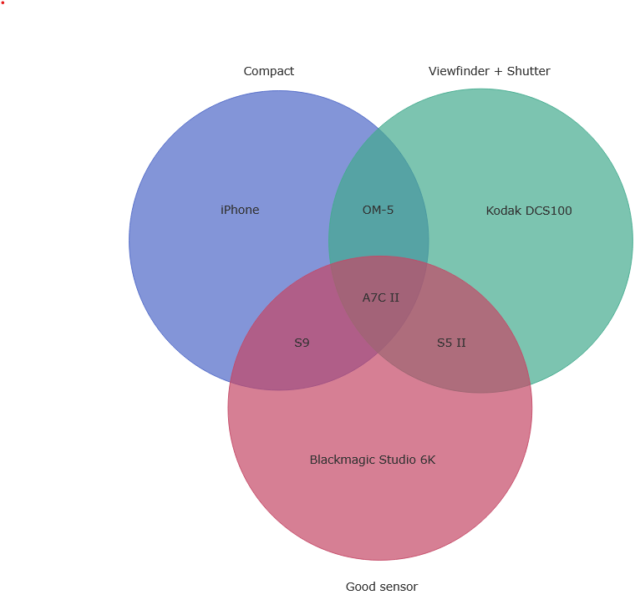
But… having four cameras across three systems would be mad, and I’d want to keep a matching pair of Lumix for video so the OM-5 would have to make way, and I’ve still got a soft spot for it. The point is, if there was a Lumix camera in this style, but feature competitive with the A7C II I would be very interested.
There’s also the hoped for “GX10” MFT camera based on the new L10 compact. That would address some of the OM-5 shortcomings with better autofocus, dynamic range (partly) and video quality. It could also serve as a video B-camera. Put me down as a “maybe”.
I think I’ll pass on the 40/2 lens for now, although I do approve of it in principle and hope it does well. I find the zooms are the strength of the S9. Compact primes are fun, but the S9 isn’t a “fun” camera ergonomically, the OM-5 does that better.
For me, the Sigma 28-70/2.8 is the most appropriate lens for the S9, as it’s not too big and gives full-frame benefits. The 20-60 is only a little physically shorter, but wider and two stops slower at the long end. It’s probably redundant now. The 18-40 loses, on balance, to the 12-45 attached to the OM-5 unless physical size is absolutely critical.
And that’s the S9 for photo, better than I imagined, but still not something I would recommend as someone’s sole camera. Here’s hoping for a version 2.